
What we do
Our services
Complete cardiovascular care — diagnostics, consultation, prevention management and procedures.
Complete cardiovascular care
Everything from first investigation to advanced intervention
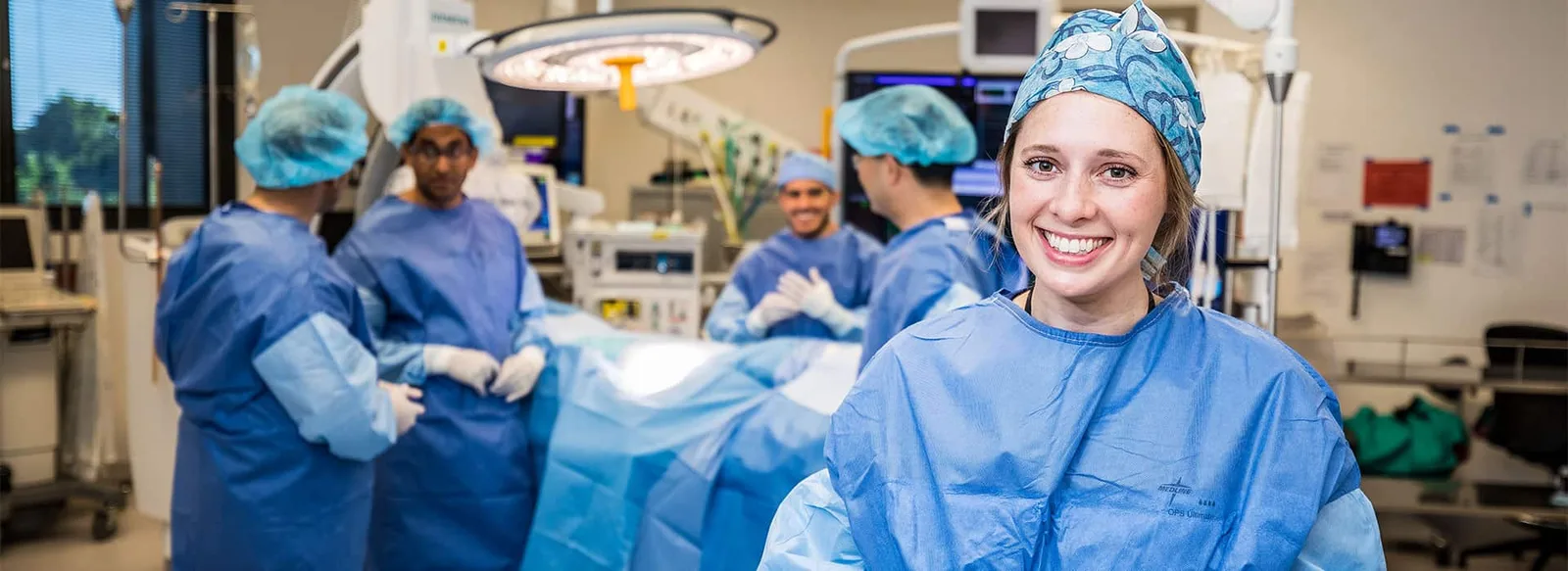
The Cardiovascular Centre is well equipped to provide complete cardiovascular services in South Australia. Our cardiologists perform procedures and hold admitting rights at both public and private hospitals across Adelaide.
Electrophysiology & Ablation
7 servicesCardioversion
Cardioversion refers to the process of restoring the normal heart rhythm from an abnormal rhythm. Most elective cardioversions are performed to treat atrial fibrillation or atrial flutter – heart rhythm disturbances that originate in the upper chambers (atria) of the heart.
Read more →Atrial Flutter Ablation
In some hearts, an abnormal heart rhythm develops when an electrical impulse starts from a different location, other than the SA node, or follows a route (or pathway) that is not normally present. This is what happens in atrial flutter.
Read more →Atrial Fibrillation Ablation
Atrial fibrillation is due to the development of electrical short circuits inside the top chambers of the heart.
Read more →AV Node Ablation & Pacing
In some hearts, an abnormal heart rhythm develops when an electrical impulse either starts from a different location, other than the SA node, or follows a route (or pathway) that is not normally present. This is what happens in atrial fibrillation.
Read more →Ventricular Tachycardia Ablation
In some hearts, an abnormal heart rhythm develops in the bottom part of the heart when an electrical impulse starts from a different location. This impulse may cause the heart to have extra beats or start racing.
Read more →Supraventricular Tachycardia Ablation
In some hearts, an abnormal heart rhythm develops in the top part of the heart when an electrical impulse either starts from a different location other than the SA node, or follows a route (or pathway) that is not normally present. When this occurs the heart will suddenly start racing.
Read more →Electrophysiology Study
An electrophysiology (EP) study is a test that maps the electrical system of the heart. Fine wires are guided to the heart through a vein to record its electrical signals, so your cardiologist can identify exactly where an abnormal rhythm is coming from.
Read more →Cardiac Devices
4 servicesImplantable Loop Recorder
In the investigation of recurrent faints or palpitations, repeated monitoring is often used. Unfortunately, these symptoms can be infrequent and be elusive to detection by periodic monitoring with ECG or holter monitors (continuous monitors).
Read more →Pacemaker Implantation
The heart has a natural pacemaker and an electrical system that directs the heart muscle to beat. Sometimes problems can arise either in the pacemaker or with this electrical system that can cause the heart to beat too slowly or stop.
Read more →Defibrillator Implantation
Under certain circumstances the beat of the heart can become abnormally fast in a very dangerous way. This usually occurs in people who already have major abnormalities of the electrical system of the heart or of the heart muscle.
Read more →Cardiac Resynchronisation
Cardiac resynchronisation therapy (CRT) is a new form of treatment for severe heart failure. CRT has been shown to reduce the symptoms of heart failure and improve outlook in selected recipients.
Read more →Interventional & Structural
1 serviceDiagnostic
2 servicesRight/Left Heart Catheterisation
A Right Heart Catheter is a procedure to assess the right side of the heart to see the pressures in the pulmonary arteries for Pulmonary Hypertension, assess cardiac output and assess right heart oxygen levels.
Read more →Adrenalin / Flecainide Challenge
The purpose of an Adrenalin Challenge is to see if you are likely to have long QT syndrome (LQTS) or Catecholaminergic Polymorphic Ventricular Tachycardia. These are disorders that affect the heart.
Read more →In-house testing
Diagnostic tests
The Cardiovascular Centre are well equipped to perform a range of diagnostic tests.
Once we have received your referral, our cardiologists will triage to advise what diagnostic testing you require. You might also be referred to our clinic for a test only, and will receive the results from the referring doctor. For our country patients, we are able to perform echocardiograms and fit holter monitors at remote clinics.
Referrals & appointments
Referrals can be addressed to the practice rather than a named doctor, and diagnostic-test referrals need no specified cardiologist. We prefer to receive referrals electronically via HealthLink.
We are not an emergency service provider. If you are experiencing a medical emergency, call 000.